
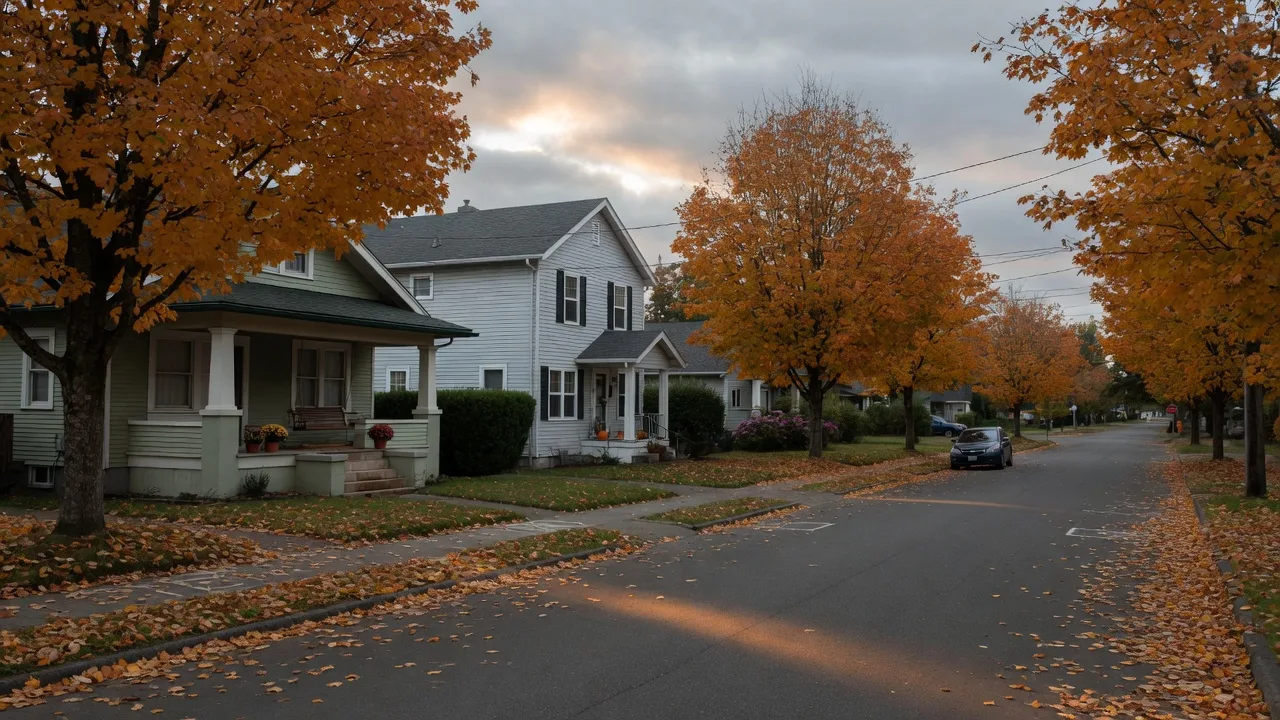
Rates made headlines again this week, and if you are a buyer, you probably felt it in your stomach. Freddie Mac’s weekly survey put the average 30-year fixed mortgage rate at 7.40% for the week ending October 8, 2026, up from 7.28% the week before. That is the seventh straight weekly increase and the highest level since 2023. At the same time, home purchase applications have been falling for weeks, and they just hit a 20-month low. Most people hear those two facts together and conclude this is a bad time to buy. I want to show you why I read this moment differently: this is exactly the kind of market where prepared buyers quietly win.
The rate, plainly
Here are the numbers from Freddie Mac’s Primary Mortgage Market Survey, released October 8, 2026.
- 30-year fixed: 7.40%, up from 7.28% the prior week
- 15-year fixed: 6.73%
- The seventh consecutive weekly increase
- The highest level since 2023
- A year ago, the 30-year averaged about 6.30%
Freddie Mac’s survey is one way to measure rates. The Mortgage Bankers Association runs its own weekly survey of the loans lenders actually write, and for the week ending October 2, 2026, that 30-year contract rate hit 7.49%, the highest since November 2023. Two different surveys, one story: rates are at multi-year highs, and they climbed there quickly.
The demand story, plainly
Here is the number that is not getting enough airtime. The Mortgage Bankers Association reported on October 7 that total mortgage application volume fell 4.2% for the week ending October 2, the fifth consecutive weekly decline and the lowest level since January 2025.
- Home purchase applications fell another 2% that week
- In the week before, purchase applications were running about 14% below the same week a year earlier
- Refinance applications fell 8% and were about 56% below a year ago
Plain English: a lot of would-be buyers have stepped to the sidelines to wait for rates to come back down. That is not a reason to panic, and it is not a sign the market is broken. It is a shift in competition. Many of the people who would have been bidding against you this spring are sitting this season out.
What the local market is actually doing
This is where the national headlines stop being useful and the local numbers start. Let’s look at Clark County, Washington, which takes in Vancouver, Camas, Washougal, and Ridgefield, right across the river from Portland. The September 2026 numbers, from the market reports I follow, show a market that has cooled in the buyer’s favor:
- Median sale price: $525,000, down 5.8% from a year earlier
- Median single-family house: $520,000
- Median condo or townhome: $292,375
- Active listings: 346, about 4.0 months of supply
- Median 23 days on market
Read those together. Prices are off from last year. Supply sits at a healthy four months, which means buyers have real choices instead of a race. Homes are still selling, just at a calmer pace, and that pace gives you time to think, compare, and negotiate.
For the Portland Metro itself, the full September report typically lands in the middle of October, and I will update this guide when it does. The signals already point the same direction: more inventory, softer pricing, and sellers who are willing to talk. Across the country, Realtor.com reported that September 2026 saw price cuts reach their highest level for the month since 2018, and that more homes are on the market in September through November than in any other season. Redfin’s data has long shown early October as the moment when buyers are most likely to get a discount off the asking price.
What a 7.40% rate does to a real payment
Let’s put this on a house people actually see. Clark County’s September median price was $525,000. With 20% down, the loan is $420,000. At 7.40%, the principal-and-interest piece of the payment lands around $2,900 a month, before taxes, insurance, and HOA dues. On that same loan at the 6.30% average from a year ago, it would have been about $2,600. Same house, same down payment, roughly $300 more a month because of where rates sit today. To be clear, this is simple math on a hypothetical loan, not a quote, but it is the honest shape of the rate story.
Here is the part the headlines skip: a roughly $300 monthly gap is exactly the kind of number that negotiation, seller concessions, and the right loan structure can work with. It is a math problem, not a wall.
Why this moment favors the prepared buyer
Every fall the market shifts in the buyer’s direction, and this year the rate run-up has pushed that shift further than usual. Fewer buyers competing. More homes to choose from. Sellers more willing to negotiate. Price cuts at their highest September level since 2018. When everyone else sits out, the buyers who stay in the game get the pick of the inventory and the negotiating room.
That does not mean the timing is right for everyone, and I will never tell you it is. It means that if your life says now, whether that is a new job with more income, a growing family, a move to the area, or a marriage, the market is working with you instead of against you. If your life says wait, waiting is a decision too, and we can run that math just as honestly.
What this means for each kind of buyer
First-time buyers. You have more room than anyone right now. Prices are softer, sellers are flexible, and both Oregon and Washington run down payment assistance programs that can shrink the gap. Oregon’s OHCS program can provide up to $60,000 or 20% of the purchase price, whichever is less, for eligible first-time and first-generation buyers at or below 100% of the area median income, with a portion of funds reserved for veterans. Oregon’s first-time home buyer savings account, which gives you a state income tax subtraction on contributions and earnings, must be opened by December 31, 2026, so that is worth putting on the calendar. In Washington, the WSHFC Home Advantage program offers a reduced-rate first mortgage with down payment assistance for income-qualified buyers. Every one of these changes by year and by county, so let’s check the current numbers against your exact situation. My down payment assistance page covers the basics, and the first-time homebuyer guide walks through the full plan.
Move-up and growing families. In a slower market, the sell-before-buy math gets more comfortable, because your current home is less likely to fly off the market the week you list it, which means less pressure to accept the first offer that comes. And if you need to buy before you sell, the bridge and home-equity options are still there to sequence it. The buy before you sell guide runs through the four numbers that decide your approach.
Investors. Softer prices and motivated sellers are a classic setup for acquisition, and the deals underwrite on today’s rate and today’s rents, not last year’s. That is exactly how I run them with clients: if the cash flow works at 7.40%, it works. My non-traditional loans guide covers the structures that are winning deals across the Pacific Northwest right now.
The October playbook
Here is what actually works in a market like this one.
Get pre-approved before you tour, not after you find the house. When other buyers are hesitating, the buyer who shows up with a pre-approval letter and real numbers wins the conversation. My pre-approval roadmap is the step-by-step.
Shop the rate instead of taking one. This is exactly where a mortgage broker’s model pays off. I work with 170+ wholesale lenders who compete for your business, and in a rising-rate market the gap between the best and worst quotes tends to widen, which is precisely when shopping matters most. The bank vs. retail lender vs. broker guide explains where that savings shows up.
Negotiate with the numbers, not a feeling. In Clark County, prices are down 5.8% from a year ago and sellers are meeting buyers. Ask for seller concessions toward closing costs or a rate buydown, and let’s put the exact payment math on the table before you write the offer. When you can show the seller’s agent the real numbers, you are negotiating with clarity.
Lock when the numbers work, not when the headline feels right. Nobody can call the bottom of a rate cycle, and waiting for a headline to feel good is not a strategy. We watch the market together, and when a rate fits your budget, we lock it and stop watching the feed. Certainty has value.
The bottom line
Here is where I land with every client this month. A 7.40% rate and a 20-month low in purchase applications are two facts that sound like reasons to stop, and for a lot of families they feel that way. But the local market is telling a quieter, more useful story: prices off last year’s levels, supply back up, sellers negotiating, and competition thinning out. The buyers who act with preparation, real numbers, and a pre-approval in hand are the ones who will close this fall on homes their neighbors will later assume were out of reach.
I am Jeff Naylor, a mortgage broker in Camas, Washington, serving buyers and sellers across the Portland Metro and Southwest Washington, including Vancouver, Ridgefield, Washougal, Happy Valley, and the surrounding counties. First-time buyers, growing families, and investors all get the same treatment: straight answers, real numbers, and no pressure to move faster than you are ready to.
If you would like to see what today’s rate means for your specific numbers, book a call or send a message. We will look at your situation together and build a plan that fits your payment and your timeline. Thanks, Jeff.