
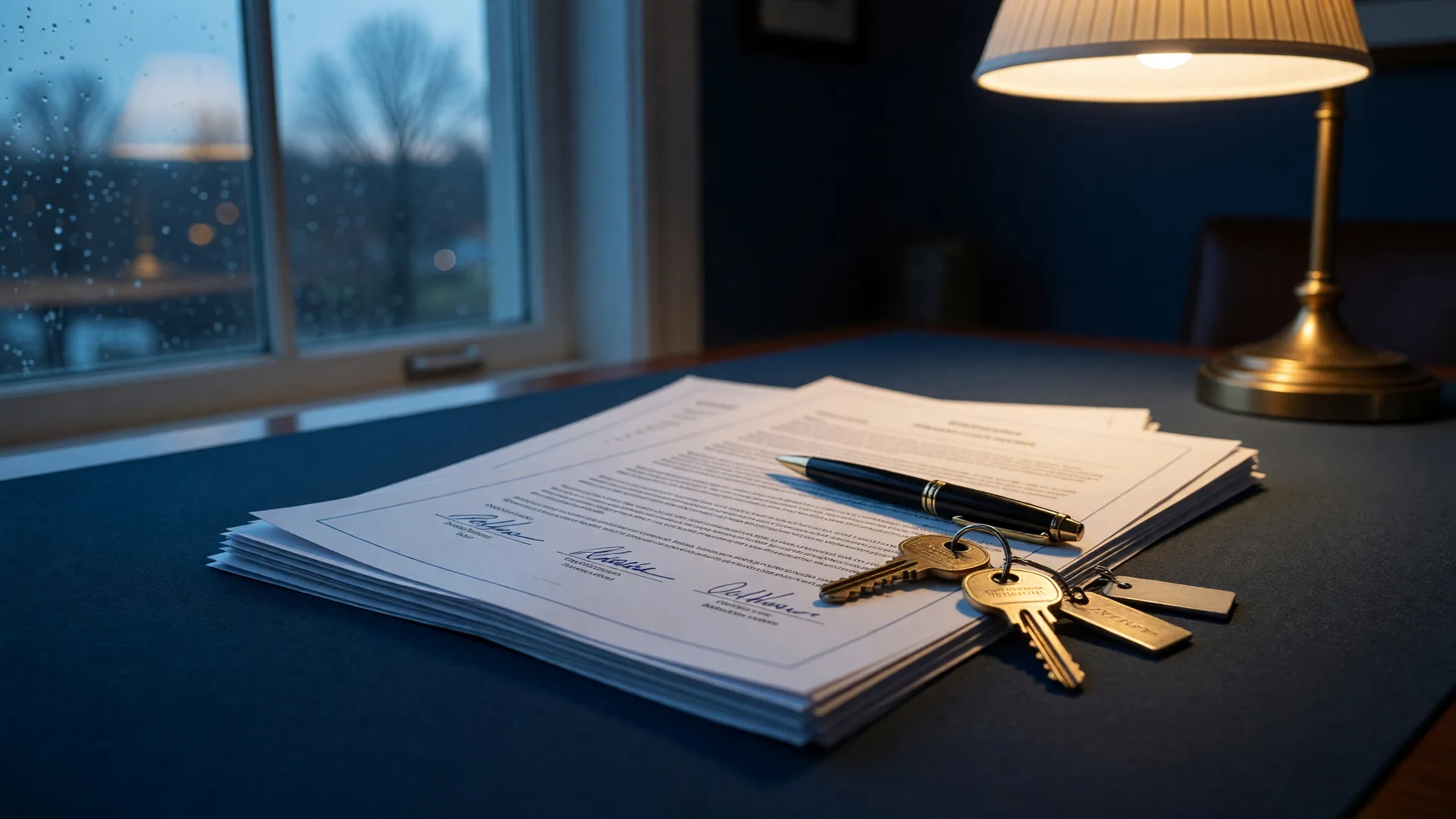
Your offer was accepted. Congratulations! The house is yours, pending a few weeks of very organized paperwork. That stretch between acceptance and the keys is where a lot of buyers go quiet and suddenly feel anxious, usually because nobody explains what is happening. Here is the plain-English version of what happens next, from escrow to the day you get the keys.
Earnest money and escrow
When your offer is accepted, part of the process is your earnest money deposit, the funds that show the seller you are serious. That money does not go to the seller directly. It sits in escrow, held by a neutral third party, and it is credited toward your purchase at closing.
If the deal falls apart for a reason your contract allows, such as an unsatisfied contingency, the return of that deposit is handled by the terms you all agreed to. That is why reading your contract and understanding your contingencies matters as much as loving the kitchen. Ask questions early, not after a deadline passes.
The appraisal and the inspection
Two different professionals will visit the house, and they are looking for very different things:
- The appraisal is ordered by your lender. Its job is to confirm the home is worth what you agreed to pay, so the lender knows the loan is sound. You do not choose the appraiser, and you generally cannot influence the number.
- The inspection is for you. The inspector checks the condition of the home from foundation to roof, and the report becomes your shopping list of what to look at before you commit.
If the appraisal comes in below the purchase price, or the inspection surfaces real issues, you have negotiating room. Your agent and loan officer have seen every version of these conversations, so you are not navigating them alone.
The lender’s final work
Behind the scenes, your loan is in underwriting. The underwriter verifies everything on your application: income, income history, assets, and the source of your down payment. This is the stage where small surprises get caught, which is exactly why you were honest on the application from day one.
One thing most buyers do not expect: lenders often re-verify employment and credit in the days right before closing. That means no new credit cards, no big purchases on credit, no job changes, and no large unexplained deposits or transfers without telling your loan officer first. One well-intentioned shopping spree between offer and closing has delayed more loans than almost anything else I see.
The Closing Disclosure
A few days before closing you will receive the Closing Disclosure, the final, line-by-line list of every cost in your loan. By law, it gets delivered at least three business days before you sign, precisely so you have real time to read it.
Read it line by line. Compare it against the Loan Estimate you were given early on. If a fee moved, ask why. If something looks wrong, we fix it before closing day, not at the table.
Closing day
On closing day you do a final walkthrough of the house, sign a stack of documents, and the funds are recorded. The money moves, the title transfers, and the keys are handed over. Most people describe that moment as equal parts adrenaline and paperwork, and the paperwork is mostly you confirming everything you already agreed to.
From accepted offer to keys is weeks of quiet progress punctuated by a few important dates. None of it is mysterious when someone walks you through it step by step, the way a good loan team does.
Waiting is the hard part. The process itself is just a checklist, and checklists are easy when you have the right people reading each line with you.
Book a call with Jeff or send a message and he will walk you through your timeline, in writing, so the only surprise on closing day is how good the keys feel in your hand.